

Have you seen the social media trend of ER docs sharing “What I’d never let my kids do”? It’s fascinating for a reason: as parents, we always want to know what we should really worry about. One, so we can protect our kids, of course. And two, to prioritize worry because as a parent it can be easy to worry 24/7 about everything.
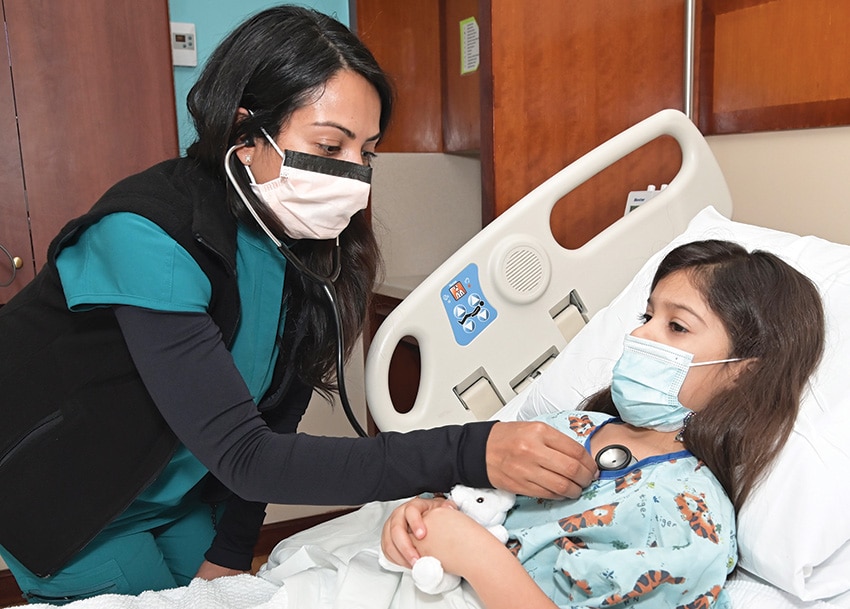
We’re thrilled to share the interview below with Rabia Malik, MD, a Yale New Haven Children’s Hospital pediatric emergency specialist and assistant professor of Pediatric Emergency Medicine at Yale School of Medicine. This local physician cares for patients at Greenwich Hospital’s pediatric emergency department—a job she says she loves. “I have always loved children and knew I wanted to be a doctor as well, so pediatrics was a great fit for me. I loved outpatient pediatrics during residency but felt a pull towards the organized chaos of pediatric emergency medicine,” says Dr. Malik.
See below for her shortlist of what she tells parents to do to keep their kids safe and out of the ER.
1. Always swim with supervision. Unfortunately, drowning is a leading cause of death for children one to four years old and the second leading cause of the unintentional death for children five to fourteen years old. Drowning can happen very quickly and is often silent. It is very important that an adult is within arm’s length from a child who is in or near any body of water, including the bathtub. Adults supervising children should avoid distracting activities and using drugs or alcohol as time is of the essence.
2. Avoid playing with high powered or ‘rare earth’ magnets. These are far more powerful than other types of magnets. If more than one magnet is ingested, the magnets can come together internally and cause parts of the gastrointestinal tract to get pinched which can lead to serious complications. I even had a case of a single magnet ingestion leading to bowel perforation!
3. Keep medications, loose pills, and household chemicals out of reach. Almost daily I see toddlers brought in for accidental ingestions. The adults are often well meaning, but don’t realize children are watching everything we do, are very curious and can see things at a lower (ground) level better than adults can. It is very important to keep all medications (pills, gummies, or liquid) not just on a high shelf (they climb fast!), but in a locked cabinet or box where the child can’t see or reach them. The same should be done for any chemicals in the house (cleaning supplies, car fluids, tide pods, etc). Bottles or items that are very bright can be enticing to young children. We are also seeing more cases of children ingesting THC edibles as they are often in food forms children would enjoy (gummies, brownies, cookies, etc). It is important to not leave these products in easy to reach places like out in the open or in bags/purses. Pro tip, if your child has ingested a medication or chemical, you can call poison control (1-800-222-1222) for guidance.
4. Stay properly buckled in the car every single time. This seems obvious, but I still see patients daily after they were in car accidents and every so often, the child (and/or adult) were not properly restrained. The majority of fatal car accidents occur in unrestrained or improperly restrained children (anywhere from 40-70%). The laws in Connecticut are:
a. Infants (Under 2 years & over or, under 30 lbs): Must use a rear-facing car seat with a 5-point harness.
b. Toddlers (2-5 years & over or, 30-40 lbs): Must use a forward-facing car seat with a 5-point harness.
c. Children (5-8 years & over or, 40-60 lbs): Must use a booster seat or a 5-point harness car seat.
d. Older Children (8+ years & over or, 60+ lbs): Can use a booster seat or a regular seat belt with a lap/shoulder belt.
e. Back Seat Rule: Children must ride in the back seat until they are at least 13 years old.
Pro tip: If there was a car seat in your car at the time of a crash, it must be replaced.
Yale New Haven Children’s Hospital has been working on implementing car seat replacement programs in CT. The Children’s Hospital provides a free car seat check and installation for families, to learn more or make an appointment, call 203-200-KIDS or email [email protected]
5. Always wear a helmet when riding a bike or e-bike. We see patients daily for bicycle related injuries with an increasing trend in e-bike related injuries. The majority of deadly injuries are sustained in patient who were not wearing a helmet at the time of the accident.
How to pick the right helmet:
a. Let your child help pick out a helmet that he or she likes. Choose a bright color to help drivers see your child.
b. Look for the CPSC Certified label on the box.
c. Try the helmet on your child. It should be snug, but not tight.
d. If your child is between 2 sizes, pick the bigger one. Most helmets come with extra pads to help you get a good fit.
e. The helmet should not move from side to side when your child shakes his head.
f. Replace any helmet that is damaged or that has been involved in a crash.
How to fit the helmet correctly:
1. You should only have room for two fingers between the child’s eyebrows and the helmet. The forehead must be covered.
2. The straps should form a “V” below the child’s ear.
3. The chin strap should be buckled snugly under the jaw. You should only be able to fit 2 fingers between the child’s chin and the straps
4. To test it out, have them shake and nod their head. If there is any movement, you may need to add more padding on the inside (if provided) or check the back for a tightening mechanism.
To learn more about pediatric services at Greenwich Hospital, visit Children’s (Pediatrics) at Greenwich Hospital.